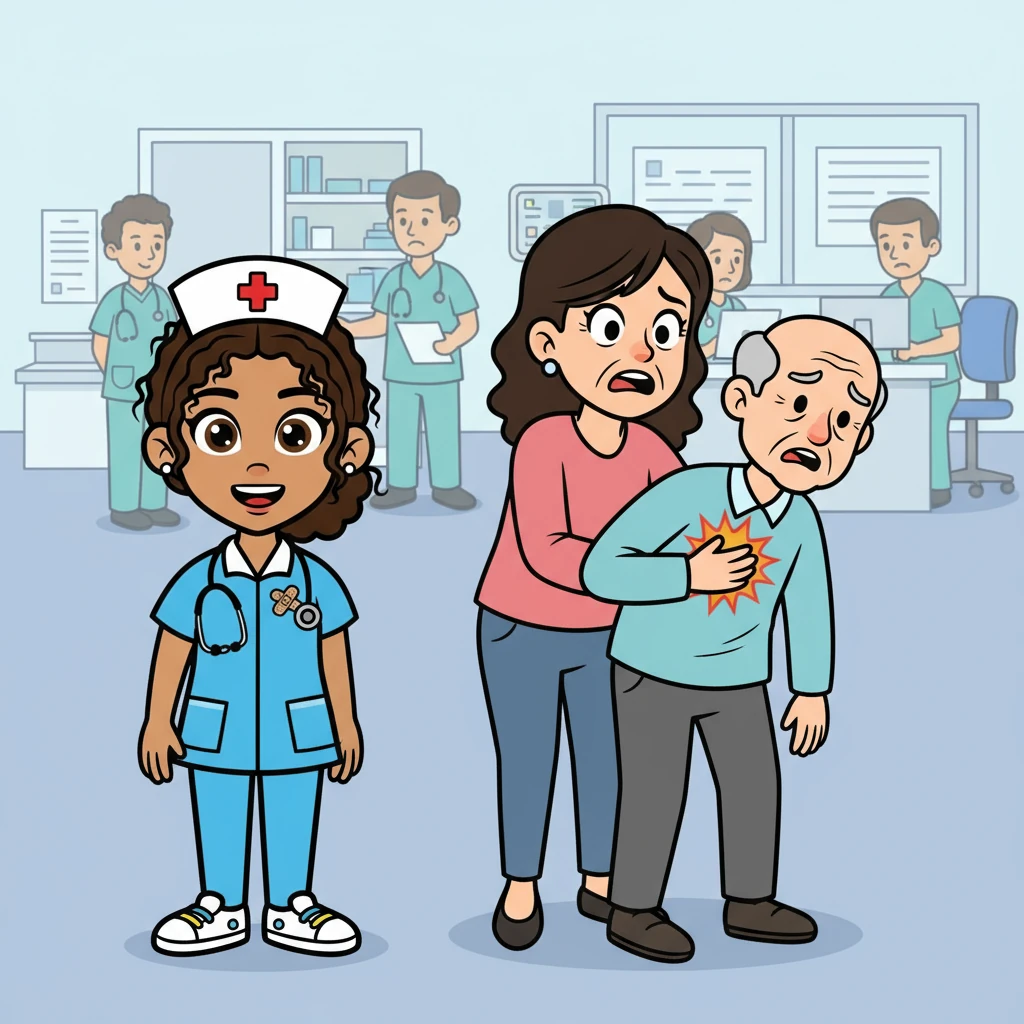
Step into the fast-paced world of the emergency room with Nurse Jordan! This heartwarming story follows Jordan as she uses her skills and quick thinking to help a patient in a critical situation. Experience the importance of teamwork, clear communication, and the power of compassion in this inspiring tale of medical care.
ER Scenario: “The Fading Pulse” It’s a busy Friday night in the emergency department. Nurse Jordan has just started her 12-hour shift when a 54-year-old male, Mr. Alvarez, is rushed in by his wife. He’s clutching his chest and sweating profusely. Step 1: Initial Assessment (Primary Survey – ABCs) Jordan immediately begins the primary assessment following the Airway, Breathing, Circulation (ABC) protocol learned in nursing school: Airway: Clear—patient is talking but gasping between words. Breathing: Rapid, shallow respirations at 28/min; oxygen saturation 88% on room air. Circulation: Skin cool and clammy, radial pulse weak and rapid at 120 bpm, BP 88/60 mmHg. Jordan applies oxygen via nasal cannula at 4 L/min and connects the patient to the cardiac monitor, noticing ST elevation on the EKG. Step 2: Prioritization and Communication (SBAR Report) Recognizing possible myocardial infarction (MI), Jordan alerts the charge nurse and the physician using the SBAR communication format: Situation: “Patient with chest pain, hypotensive, ST elevation on monitor.” Background: “54-year-old male, no known cardiac history per spouse.” Assessment: “HR 120, BP 88/60, SpO₂ 88% on room air.” Recommendation: “Request immediate evaluation for possible MI and IV access for medication administration.” Step 3: Intervention Following the physician’s verbal orders: Jordan establishes two large-bore IV lines (18 gauge). Draws cardiac enzymes and labs (troponin, CBC, CMP). Administers aspirin 325 mg (chewable) and nitroglycerin as ordered — but pauses before giving the nitro after noticing the patient’s low blood pressure (good critical thinking). Places the patient on continuous cardiac monitoring and documents all interventions in the electronic medical record (EMR). Step 4: Reassessment After oxygen and fluids are started, BP improves to 102/68 mmHg, HR 98 bpm, and the patient’s color improves. Step 5: Collaboration and Handoff When the cardiac team arrives to transport Mr. Alvarez for an emergency cardiac catheterization, Jordan gives a concise handoff using the ISBAR format, ensuring continuity of care. Learning Outcomes: This case reinforces nursing school competencies such as: Rapid assessment and triage skills using ABCs. Critical thinking when interpreting vital signs and EKG data. Effective communication using SBAR/ISBAR. Safe medication administration and understanding contraindications. Documentation and patient advocacy in an emergent situation.